The monsoon brings relief from the heat, but it also brings a familiar set of problems — oily yet dehydrated skin, sudden breakouts, an itchy scalp, and hair that frizzes the moment you step outside. Rising humidity slows down how quickly sebum clears from the skin’s surface, which means pores stay congested for longer while the deeper layers of skin can still feel dry and tight. It’s a confusing combination, and the skincare routine that worked perfectly in April often stops working the moment the rains set in.
The good news is that a handful of essential oils, used correctly and in the right dilution, can address almost every monsoon skin and hair concern — naturally, and without the heaviness of rich commercial creams that tend to sit on the skin rather than absorb into it.
Why Monsoon Skin Behaves Differently
Before jumping into the oils, it helps to understand what’s actually happening. Humid air holds onto moisture on the skin’s surface, which traps sweat, oil, and bacteria in the pores. At the same time, frequent exposure to rain and repeated washing strips the skin’s natural barrier, leaving it dry underneath. The result: more breakouts, patches of rough texture, a duller complexion, and — for hair — an oily scalp with dry, frizzy ends.
This is exactly why lightweight, fast-absorbing oils outperform heavier formulations during the rains.
7 Essential Oils for the Monsoon Season
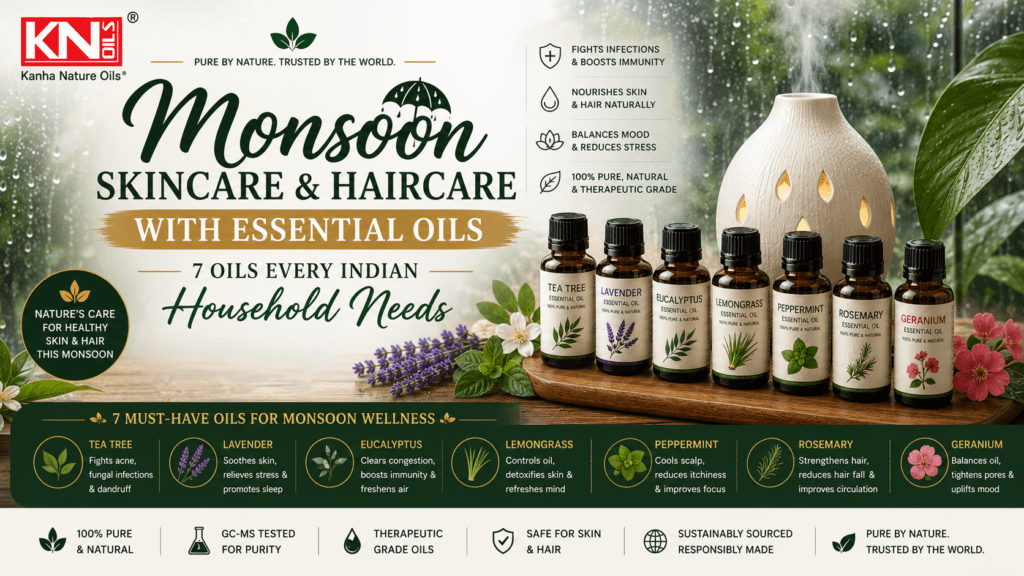
1. Tea Tree Oil — For Breakouts and Fungal Infections Tea tree is the single most useful oil for monsoon skin. Its natural antibacterial and antifungal properties make it ideal for tackling the acne flare-ups and fungal patches that humidity encourages. Used at around 1% dilution — roughly six drops in 30ml of a light carrier oil like grapeseed — it can be dabbed directly onto blemishes twice a day.
2. Neem Oil — The Ayurvedic All-Rounder A cornerstone of Ayurvedic skincare for centuries, neem oil is prized for its antibacterial, antifungal, and anti-inflammatory properties. It helps control excess oil, calm breakouts, and purify the skin — making it a natural fit for the monsoon’s oily-on-top, congested-underneath skin type.
3. Lavender Oil — For Scalp Health and Stress Relief Beyond its calming aroma, lavender oil supports scalp health and can help reduce monsoon-related dandruff and itchiness when diluted into a scalp oil blend. It also doubles as a stress-relieving addition to an evening diffuser routine.
4. Eucalyptus Oil — For Humid, Musty Indoor Air Eucalyptus remains India’s most widely used essential oil, and for good reason — it’s excellent in a diffuser blend to cut through the stale, damp air that builds up in closed rooms during continuous rain. It also has respiratory benefits, which is a welcome bonus during a season known for colds and congestion.
5. Rosehip Seed Oil — For Nighttime Hydration While technically a carrier oil rather than a true essential oil, rosehip seed oil deserves a place in any monsoon routine. Two to three drops applied after cleansing at night hydrate the skin without leaving a heavy residue — ideal for the dry-underneath layer that monsoon skin often has.
6. Grapeseed Oil — The Ideal Carrier Rated low on the comedogenic scale, grapeseed oil is one of the safest carrier oils for oily and acne-prone skin. It absorbs quickly, doesn’t clog pores, and is the recommended base for diluting stronger essential oils like tea tree.
7. Rosemary Oil — For Hair Fall and Scalp Circulation Monsoon humidity often triggers hair fall and an oily scalp. Rosemary oil, diluted into a scalp treatment, is known for supporting circulation and strengthening hair from the root — a simple addition to a weekly hair oiling ritual.
A Simple Monsoon Routine
- Morning: Cleanse, then apply a tea tree–grapeseed spot treatment only where needed.
- Night: Cleanse, then apply 2–3 drops of rosehip seed oil for hydration.
- Weekly: A neem and rosemary scalp oil massage, left in for an hour before washing.
- At home: A eucalyptus and lavender diffuser blend to keep indoor air fresh during heavy rain days.
The One Rule That Matters Most
None of this works if the oil itself is adulterated or impure. Monsoon is precisely when demand — and prices — for genuine essential oils rise, which unfortunately also increases the amount of diluted or synthetic product in the market. Always source from a supplier who can verify purity and origin, and always dilute essential oils properly before applying them to skin or scalp — using them undiluted can cause irritation rather than relief.
Done right, a few well-chosen oils can carry your skin and hair through the entire monsoon season — no heavy creams, no guesswork, just what the season actually needs.