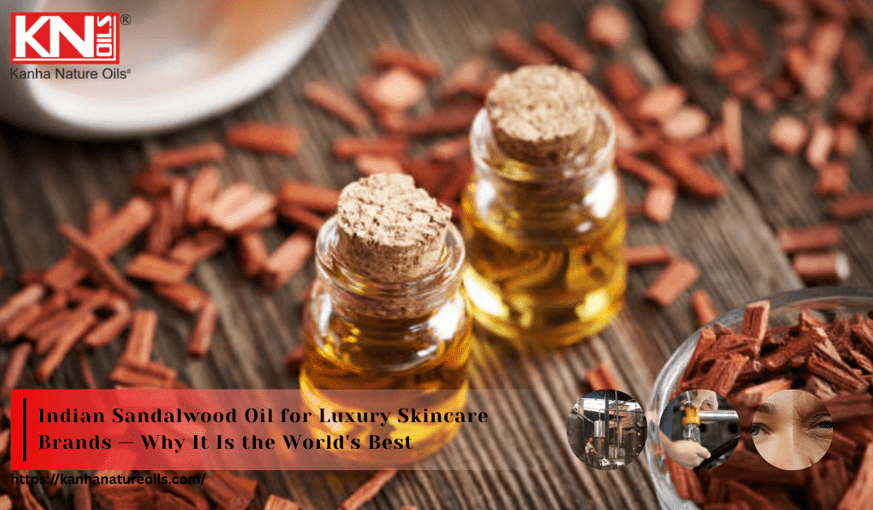
In the world of luxury skincare, few ingredients carry the prestige, efficacy, and heritage of Indian sandalwood oil. Derived from Santalum album—the East Indian sandalwood tree—this oil has been valued for thousands of years in Ayurveda, perfumery, and ritual use across India and the Middle East. Today, it is one of the most sought-after ingredients by premium cosmetic brands globally. If your brand is targeting the luxury skincare segment, Indian sandalwood oil is not just a desirable ingredient—it is a powerful differentiator. What Makes Indian Sandalwood Oil Superior? Not all sandalwood oils are equal. The key differentiating factor is alpha-santalol content — the primary active compound responsible for sandalwood’s skin benefits and distinctive fragrance. Indian Sandalwood (Santalum album): Alpha-santalol content 45-55% Australian Sandalwood (Santalum spicatum): Alpha-santalol content 20-30% Synthetic sandalwood: Zero natural santalol—fragrance only, no skin benefits For luxury skincare brands that make performance claims, Indian sandalwood is the only grade that delivers measurable, clinically backed results. Its higher alpha-santalol content means deeper moisturization, stronger anti-inflammatory action, and a more complex, longer-lasting fragrance. Proven Skin Benefits of Indian Sandalwood Oil 1. Deep Moisturizing Its lightweight yet nourishing texture penetrates effectively, helping restore skin softness and hydration. 2. Anti-Aging Support Regular use may help reduce the appearance of fine lines while improving skin elasticity. 3. Natural Brightening Helps promote a more even skin tone and supports reduction of dullness and pigmentation. 4. Soothing & Anti-Inflammatory Excellent for calming redness, irritation, and stressed skin. 5. Purifying & Clarifying Its natural antiseptic properties make it suitable for acne-prone and blemish-prone skin. 6. Long-Lasting Aroma Fixative Widely used in perfumery to enhance fragrance longevity and depth. Best Applications in Luxury Skincare Premium face serums and facial oils Luxury anti-aging creams and moisturisers High-end perfumery and body mists Ayurvedic and wellness-positioned skincare lines Men’s grooming premium segment Middle Eastern beauty products — attars and traditional fragrance oils What to Demand from Your Sandalwood Oil Supplier Given the premium price of Indian sandalwood oil, adulteration is unfortunately common in the market. Here is what to insist on before purchasing: GC-MS report confirming alpha-santalol content above 45% Batch-specific Certificate of Analysis Certificate of Origin confirming Indian source GMP and ISO certification of the manufacturing facility Complimentary sample for your lab to independently verify ESSENTIAL OILS IN AROMATHERAPY Kanha Nature Oils — Your Trusted Indian Sandalwood Oil Supplier At Kanha Nature Oils, we supply authentic, GC-MS-verified Indian sandalwood oil to luxury skincare and fragrance brands across the USA, UAE, UK, and Australia. Every batch is tested in our in-house R&D lab, and we provide complete documentation for regulatory compliance in your market. We understand that for premium brands, ingredient quality is brand quality. That is why we operate with a simple philosophy: Don’t tell what you can show. Request your complimentary sample and let the oil speak for itself. Contact us at info@aromatherapyoil.in or visit kanhanatureoils.com. You May Also Like: Sandalwood Oil For Weight Loss – Benefits & How To Use Face Yoga Massage Oils: The Ultimate Guide to Skincare Top Qualities to Look for in a Bulk Lavender Oil Supplier in India

Blog
For cosmetic, skincare, personal care, and wellness brands, lavender essential oil is more than just a fragrance ingredient—it is a key component in countless premium formulations. From face serums and body lotions to aromatherapy blends and hair care products, lavender oil remains one of the most in-demand essential oils worldwide. When sourcing lavender oil in bulk, product consistency, purity, and supplier reliability directly impact your brand reputation. Delays, adulteration, or poor-quality batches can disrupt production schedules and damage customer trust. That is why many international procurement teams in the USA, UK, UAE, and Australia now prefer India as their strategic sourcing destination. India offers the perfect combination of competitive pricing, advanced manufacturing, global export capability, and high-quality natural oils. If you are searching for a trusted bulk lavender oil supplier in India, this complete B2B guide will help you choose the right partner and avoid costly mistakes. Why India is the Preferred Source for Bulk Lavender Oil India has become a leading global hub for essential oil production and exports. Buyers worldwide increasingly choose Indian suppliers because they offer premium quality oils with strong manufacturing standards. 1. Competitive Pricing with High Purity Indian manufacturers provide cost-effective pricing compared with suppliers in Europe and North America while maintaining international quality benchmarks. 2. Advanced Distillation Expertise India combines traditional botanical knowledge with modern steam distillation technology to produce highly aromatic and effective lavender oil. 3. Certified Manufacturing Facilities You can easily find a lavender oil manufacturer that is GMP certified with additional ISO, organic, HACCP, and other export-standard certifications. 4. Direct Manufacturer Advantage Working directly with producers eliminates unnecessary trading layers, helping buyers secure better pricing, faster communication, and customized solutions. 5. Strong Export Infrastructure Indian exporters regularly ship to the USA, UK, UAE, Australia, Europe, and Asia with complete compliance documentation. 6. Flexible Bulk Supply Capacity Whether you need 25 kg trial orders or multi-ton annual contracts, many Indian manufacturers can scale according to your business growth. What to Look for in a Bulk Lavender Oil Supplier Choosing the right supplier is critical. Here are the most important checkpoints every procurement manager should follow. 1. GMP and ISO Certifications Always prioritize suppliers with GMP (Good Manufacturing Practice) and ISO 9001 certification. These standards indicate that the manufacturer follows consistent production processes, hygiene controls, quality systems, and traceability procedures. Without certified systems, you risk inconsistent batches and regulatory issues. 2. Batch-Specific GC-MS Reports GC-MS (Gas Chromatography-Mass Spectrometry) testing confirms the chemical composition and purity of lavender oil. A trustworthy supplier should provide: Batch-specific GC-MS reports COA (Certificate of Analysis) MSDS / SDS documents Allergen declarations if required This ensures your formulation team knows exactly what is entering production. 3. Transparent MOQ and Pricing Reputable suppliers are upfront about minimum order quantities (MOQ) and pricing tiers. Be cautious of suppliers who are vague about pricing or push for large commitments before you have evaluated quality. 4. Complimentary Sample Availability Professional manufacturers understand that quality must be tested before commitment. A supplier willing to send samples demonstrates confidence in product quality and helps your R&D team validate aroma, performance, and compatibility. 5. Packaging and Private Label Options Many brands also need: Aluminium bottle HDPE containers Food-grade packaging White label supply- Choose a supplier who can grow with your business requirements. Key Specifications for Bulk Lavender Essential Oil Before finalizing a purchase, confirm technical details. Botanical Name: Lavandula angustifolia Extraction Method: Steam Distillation Appearance: Clear to pale yellow liquid Aroma: Fresh, floral, herbaceous Main Components: Linalool, Linalyl Acetate Shelf Life: Typically 24 months with proper storage Applications: Skincare, body care, soaps, candles, perfumes, baby care, aromatherapy Common Grades Available Therapeutic Grade Cosmetic Grade Industrial Grade Food / Flavor Grade (where compliant) Why Choose Kanha Nature Oils for Bulk Lavender Oil Supply Kanha Nature Oils has been supplying premium essential oils to cosmetic, wellness, and personal care brands worldwide since 2010. Why Global Buyers Choose Us: GMP & ISO 9001 certified manufacturing facility In-house quality control and GC-MS testing Consistent aroma and purity standards Competitive factory-direct pricing Export support for USA, UK, UAE, Australia & more Flexible MOQ for growing brands Fast documentation and dispatch support Professional B2B account handling Our facility in Bahadurgarh, Haryana, is designed to meet international quality expectations while offering reliable long-term supply partnerships. We Believe in Proof, Not Promises Instead of asking buyers to trust marketing claims, we encourage testing first. Request a complimentary sample so your procurement and formulation team can independently verify quality before placing your first bulk order. Conclusion Sourcing from a trusted bulk lavender oil supplier in India can significantly improve your cost efficiency, product consistency, and supply chain reliability. The key is selecting a manufacturer that offers: Certified production systems Transparent pricing Batch-level quality reports Export experience Sample-first confidence When you choose the right partner, India becomes one of the most valuable sourcing destinations for lavender essential oil. Note: To take your business forward, purchase lavender essential oil in bulk from Kanha Nature Oils today. You can also request free samples to verify the quality. Contact us: info@aromatherapyoil.in | +91 9810805866 | kanhanatureoils.com You May Also Like: How to Choose a Reliable Essential Oil Exporter from India — 7 Things to Check Top 9 Essential Oils for Cosmetic Formulation — A Manufacturer’s Guide Top Qualities to Look for in a Bulk Lavender Oil Supplier in India Kanha Nature Oils For more information, contact info@aromatherapyoil.in. Mobile Number: 9810805866
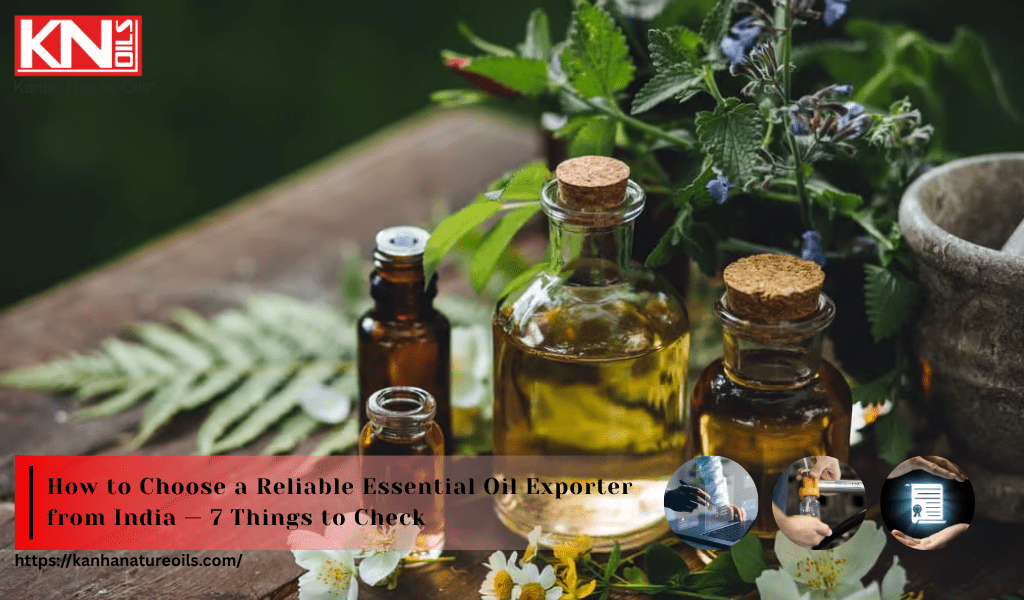
India is the world’s largest exporter of essential oils by shipment volume—with over 115,000 shipments annually to buyers in more than 50 countries. This means enormous choice for international buyers. But it also means significant risk. Not every supplier who claims to be a manufacturer actually is one. Not every certificate presented is current. And not every oil labeled as “pure” actually is. In this guide, we share the 7 most important things to verify before placing a bulk order with an Indian essential oil exporter. 1. Verify They Are an Actual Manufacturer — Not a Trader This is the most important distinction. Many businesses in India present themselves as manufacturers but are actually traders who source oils from third parties and resell them. The difference matters enormously for quality consistency, pricing, and traceability. How to verify: Ask for photos and videos of their manufacturing facility. Request their GST registration details and factory address. A legitimate manufacturer will welcome this request; a trader will deflect it. 2. Check Their Certifications Are Current GMP, ISO, and organic certifications all have expiry dates. An outdated certificate is meaningless. Always ask for the current certificate with its validity date clearly visible. If a supplier shares a certificate without a date or with an expired date, walk away. 3. Demand Batch-Specific GC-MS Reports A GC-MS report proves the chemical composition of the specific batch you are ordering—not just any batch from any time. Generic GC-MS reports that are not batch-specific provide no assurance about what is actually in your shipment. Insist on batch-specific documentation every single time. 4. Test Their Sample Before You Commit A confident, quality-focused supplier will always offer samples before you place a bulk order. Use your own lab or a third-party testing facility to verify the GC-MS composition matches what is claimed. This is standard practice for professional buyers, and any serious supplier will expect and welcome it. 5. Check Their Export Track Record Ask for references from existing international clients in your target geography. You can also verify a supplier’s export history through platforms like Volza, Panjiva, or Zauba Corp.—these databases show actual shipment records and buyer names from Indian customs data. A supplier with a strong, verifiable export history is significantly lower risk than one without. 6. Evaluate Their Documentation Process International trade requires a specific set of documents for smooth customs clearance. A professional exporter should provide, without being asked: Commercial Invoice and Packing List Certificate of Analysis (COA) GC-MS Test Report Material Safety Data Sheet (MSDS) Certificate of Origin Shipping Bill and Bill of Lading If a supplier is vague about any of these documents or has never provided them to international buyers before, that is a serious red flag. 7. Assess Their Communication and Responsiveness Your essential oil supplier is a long-term supply chain partner, not just a one-time transaction. Evaluate how quickly they respond to inquiries, how clearly they communicate, and how willing they are to answer technical questions about their products and processes. Poor communication before the sale is a reliable predictor of poor communication when you have a problem after it. Why Kanha Nature Oils Passes All 7 Checks We are an actual manufacturer—visit our facility in Bahadurgarh, Haryana, anytime. All certifications are current—GMP, ISO 9001, Organic, FSSAI, KOSHER, HALAL We provide batch-specific GC-MS reports as standard with every shipment We offer complimentary samples with no commitment required We have been exporting to 30+ countries for 15+ years—verifiable on Volza and Panjiva Complete export documentation prepared and provided for every order Our team responds to all international enquiries within 24 hours ESSENTIAL OILS IN AROMATHERAPY Conclusion Choosing the right essential oil exporter from India requires due diligence — but it is worth the effort. A reliable, certified manufacturer partner can become one of your most valuable supply chain assets. Use these 7 checks every time, and you will significantly reduce the risk of quality failures, supply disruptions, or compliance problems. At Kanha Nature Oils, we welcome every one of these checks. Our philosophy is simple: Don’t tell what you can show. Start with a free sample today. Contact us: info@aromatherapyoil.in | +91 9810805866 | kanhanatureoils.com You May Also Like: Carrier Oils For Perfume Making – Create Your Fragrance Top 7 Carrier Oils Proven to Boost Hair Growth Naturally Argan Carrier Oil: The secret to healthy, beautiful skin and hair.
Choosing the right essential oils for your cosmetic formulations is one of the most critical decisions your R&D team will make. The wrong choice can mean poor skin compatibility, inconsistent fragrance performance, or regulatory headaches. The right choice elevates your product above the competition and builds lasting consumer loyalty. At Kanha Nature Oils, we work with cosmetic brands across the USA, UAE, UK, and Australia to identify the ideal oils for their specific formulation needs. Here are the top 9 essential oils every cosmetic manufacturer should know — and exactly how to use them. 1. Lavender Essential Oil The most versatile oil in cosmetic manufacturing. Rich in linalool and linalyl acetate, lavender is anti-inflammatory, antibacterial, and deeply calming. Ideal for face serums, toners, night creams, and baby care products. Works equally well as an active ingredient and as a natural fragrance component. 2. Sandalwood Essential Oil Indian Sandalwood (Santalum album) is prized globally for its high alpha-santalol content—the compound responsible for deep moisturization, skin brightening, and anti-aging properties. A key ingredient for luxury skincare brands targeting the premium segment. 3. Tea Tree Essential Oil The go-to oil for acne-targeting and antibacterial formulations. Tea tree oil’s terpinen-4-ol content makes it highly effective in cleansers, spot treatments, and scalp care products. Ensure your supplier provides standardized terpinen-4-ol content above 30%. 4. Eucalyptus Essential Oil Widely used in body care, respiratory wellness products, and men’s grooming lines. Eucalyptus oil is cooling, antibacterial, and invigorating. A staple for massage oils, muscle balms, and spa product ranges. 5. Frankincense (Boswellia) Essential Oil A premium anti-aging ingredient increasingly sought by luxury brands. Frankincense promotes skin cell regeneration, reduces the appearance of scars and fine lines, and carries a deep, meditative fragrance. Particularly popular in Middle Eastern and premium Western markets. 6. Geranium Essential Oil Balancing, astringent, and beautifully floral. Geranium oil is ideal for oily and combination skin formulations, toners, and feminine care products. It blends exceptionally well with rose and lavender for complex fragrance profiles. 7. Peppermint Essential Oil A high-demand oil for hair care, oral care, and cooling body products. Peppermint’s menthol content delivers the cooling sensation consumers associate with freshness and efficacy. Available in multiple grades—ensure food-grade or cosmetic-grade depending on your application. 8. Ylang Ylang Essential Oil Rich, floral, and sensuous—ylang-ylang is a favorite for perfumery, hair care, and romantic body care lines. Its benzyl acetate content makes it effective for managing oily skin and scalp conditions. Widely used in luxury fragrance blending. 9. Chamomile Essential Oil The most gentle oil for sensitive skin formulations. Chamomile oil is particularly valued for its high chamazulene content—a powerful anti-inflammatory compound that gives it its distinctive blue color. Essential for baby care, eczema-targeted products, and sensitive skin ranges. Manufacturer Tips for Using Essential Oils To achieve consistent product quality, manufacturers should always: 1. Verify Documentation Use suppliers that provide: COA MSDS GC-MS Reports Batch consistency records Regulatory declarations 2. Control Dosage Essential oils are highly concentrated. Overuse may irritate skin or overpower fragrance balance. 3. Perform Stability Testing Check for: Color shift Oxidation Aroma fading Emulsion separation 4. Understand Allergen Labeling Many oils naturally contain compounds such as limonene or linalool that may require declaration depending on market regulations. How to Choose the Right Essential Oil Supplier Manufacturers should select suppliers based on: Purity standards Botanical authenticity Competitive bulk pricing Sustainable sourcing Packaging quality Global export capability Technical support Reliable sourcing is often more important than low price. Conclusion Essential oils continue to transform cosmetic formulation by combining aroma, natural appeal, and functional beauty benefits. The best options for manufacturers include lavender, sandalwood, tea tree, eucalyptus, frankincense, geranium, peppermint, ylang ylang, and chamomile. Each oil offers unique value, whether you are creating anti-aging serums, scalp care, body lotions, face creams, beard oils, soaps, or premium wellness cosmetics. For long-term success, manufacturers should focus on purity, formulation safety, regulatory compliance, and dependable bulk sourcing. When used correctly, essential oils can help cosmetic brands create products that consumers trust, enjoy, and repurchase. ESSENTIAL OILS IN AROMATHERAPY Why Source These Oils from Kanha Nature Oils All 9 of these oils are manufactured and supplied by Kanha Nature Oils from our ISO- and GMP-certified facility in India. Every batch comes with complete GC-MS documentation and a Certificate of Analysis. We supply in quantities from 1 kg samples to full bulk drums—making us the ideal partner for both product development and full-scale production. Visit kanhanatureoils.com or contact info@aromatherapyoil. in to request samples for your next formulation project. You May Also Like: 9 Amazing Benefits of Black Pepper Oil for Pain, and Skin, Health Top 5 benefits of nutmeg essential oil for skin, pain & well-being Why Papaya Seed Carrier Oil Is a Skincare Game-Changer for Smooth & Clear Skin
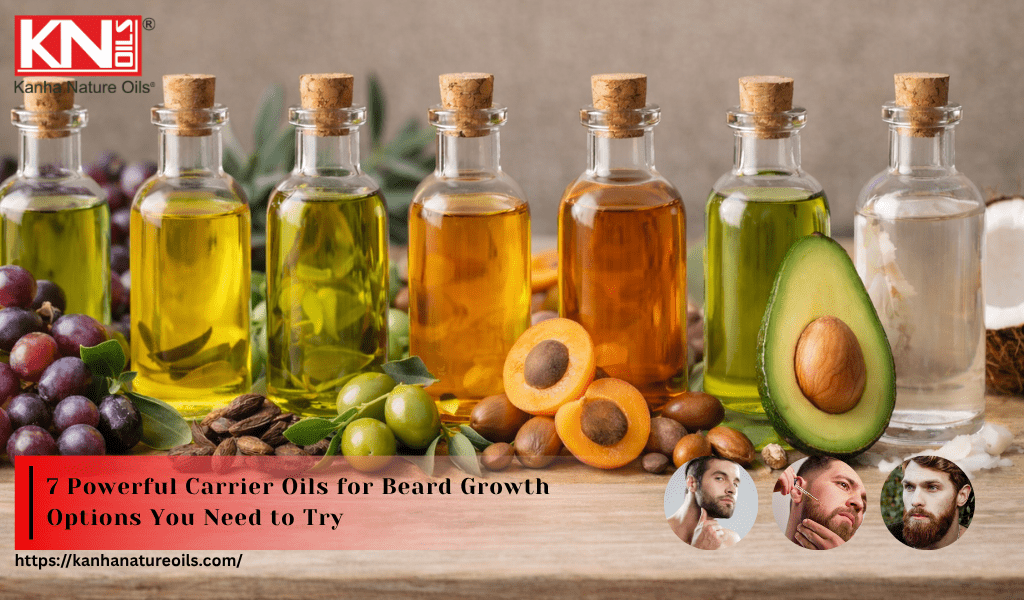
Growing a thick, healthy, and well-groomed beard isn’t just about genetics—it’s also about how well you care for your facial hair and the skin underneath. One of the most effective and natural ways to improve beard health is by using carrier oils. These plant-based oils are packed with essential fatty acids, vitamins, and antioxidants that nourish both the beard and the skin, creating the ideal environment for better beard growth and appearance. Carrier oils don’t magically speed up beard growth overnight, but they play a crucial role in reducing dryness, preventing breakage, moisturizing skin, and improving beard texture, which ultimately makes your beard appear fuller and healthier. In this comprehensive guide, Kanha Nature Oils explores 7 effective carrier oils for beard growth that you simply must try. What Are Carrier Oils & Why Do They Matter for Beard Growth? Carrier oils are natural oils extracted from seeds, nuts, or fruits. They are commonly used in grooming products because they are gentle on the skin and can safely dilute essential oils. For beard care, carrier oils: Hydrate the skin under your beard Reduce itchiness and beard dandruff Improve hair softness and manageability Protect hair from damage and breakage Support healthier beard growth conditions Because beard hair depends on healthy skin, using the right oil can significantly improve how your beard grows and looks. 1. Grapeseed Oil – Lightweight & Fast Absorbing Grapeseed oil is among the lightest carrier oils, making it a great choice for men who prefer a non-greasy feel. Its smooth texture spreads easily through the beard and skin, absorbing fast without leaving heavy residue. This helps moisturize facial hair, soften rough strands, and nourish the skin underneath while keeping the beard fresh, clean, and comfortable throughout the day. Benefits: Non-greasy and fast-absorbing Rich in antioxidants Helps control oily skin Ideal for short or thin beards This oil is especially suitable for beginners or those with oily or acne-prone skin, as it won’t clog pores easily. 2. Jojoba Oil – Closest to Natural Skin Oil Jojoba oil is widely regarded as the gold standard among beard oils because its structure closely mimics the natural sebum produced by your skin. This similarity allows it to absorb easily, moisturize deeply, and help balance oil production. It softens coarse beard hair, reduces dryness, soothes itchy skin underneath, and adds a healthy shine without feeling greasy, making it ideal for daily beard care and grooming routines. Benefits: Balances oil production Prevents dryness and beard dandruff Non-comedogenic (won’t clog pores) Absorbs easily without greasy feel It helps maintain a healthy skin environment, which is essential for consistent beard growth. 3. Olive Oil – Deep Nourishment for Thick Beards Olive oil is a time-tested natural remedy valued for its rich nutritional profile. Packed with vitamins A and E, it helps nourish the skin and hair while supporting moisture retention. Its antioxidant properties may also protect against dryness and environmental damage, making it a popular choice in beauty and wellness routines. Benefits: Deeply moisturizes coarse beards Strengthens hair strands Adds shine and smoothness Helps reduce split ends It’s best suited for men with thick or dry beards that need intense hydration. 4. Apricot Kernel Oil – Gentle & Skin-Friendly Apricot kernel oil is a gentle, lightweight carrier oil known for its skin-friendly properties. It absorbs quickly without leaving a greasy feel, making it perfect for daily use. Rich in vitamins A and E, it helps nourish, soften, and moisturize the skin. Its mild nature makes it especially suitable for sensitive skin, soothing dryness and supporting a healthy, smooth complexion naturally. Benefits: Softens beard hair Soothes irritated skin Rich in vitamins A and E Lightweight and non-greasy This oil is perfect for daily use and works especially well for those prone to skin irritation. 5. Argan Oil – The “Liquid Gold” for Beard Care Often called “liquid gold,” argan oil is rich in antioxidants and vitamin E, making it a popular choice for skin and hair care. It helps moisturize, soften, and protect while supporting a healthy, nourished appearance without feeling overly greasy. Benefits: Repairs damaged hair Reduces frizz and dryness Improves beard softness Enhances shine without greasiness It is widely used in grooming products because it improves overall beard quality and manageability. 6. Avocado Oil – Nutrient-Dense Powerhouse Avocado oil is packed with essential fatty acids, biotin, and vitamins A, D, and E that help deeply nourish the hair from root to tip. It moisturizes dry strands, strengthens weak hair, and supports healthier growth. Its rich texture penetrates the scalp and hair shaft, improving softness, shine, and overall manageability while reducing breakage and dryness naturally. Benefits: Strengthens beard hair Promotes hydration and thickness Helps prevent breakage Ideal for dry or brittle beards This oil is slightly heavier, making it better for nighttime use or deep conditioning. 7. Coconut Oil – Deep Conditioning & Protection Coconut oil is one of the most popular natural oils for beard care because of its deep conditioning benefits. It helps moisturize beard hair, reduce dryness, and soften rough texture. Rich in nourishing fatty acids, it also supports healthier-looking growth while adding shine and making the beard easier to manage daily. Benefits: Softens and smooths beard hair Prevents protein loss in hair Has antibacterial and antifungal properties Moisturizes skin underneath the beard It also helps reduce irritation and improve beard appearance, although it may feel heavy for some users. Do Carrier Oils Really Help Beard Growth? Here’s the honest truth:Carrier oils don’t directly increase beard growth speed, but they significantly improve the conditions required for healthy growth. They: Reduce inflammation Prevent dryness and breakage Keep hair follicles nourished Improve overall beard thickness appearance Healthy skin + strong hair = better-looking beard growth. How to Use Carrier Oils for Beard Growth To get the best results: Wash your beard with a mild cleanser Pat dry (slightly damp is ideal) Take 3–5 drops of oil Rub between your palms Massage into skin and beard Comb or style as desired Consistency is key—use daily
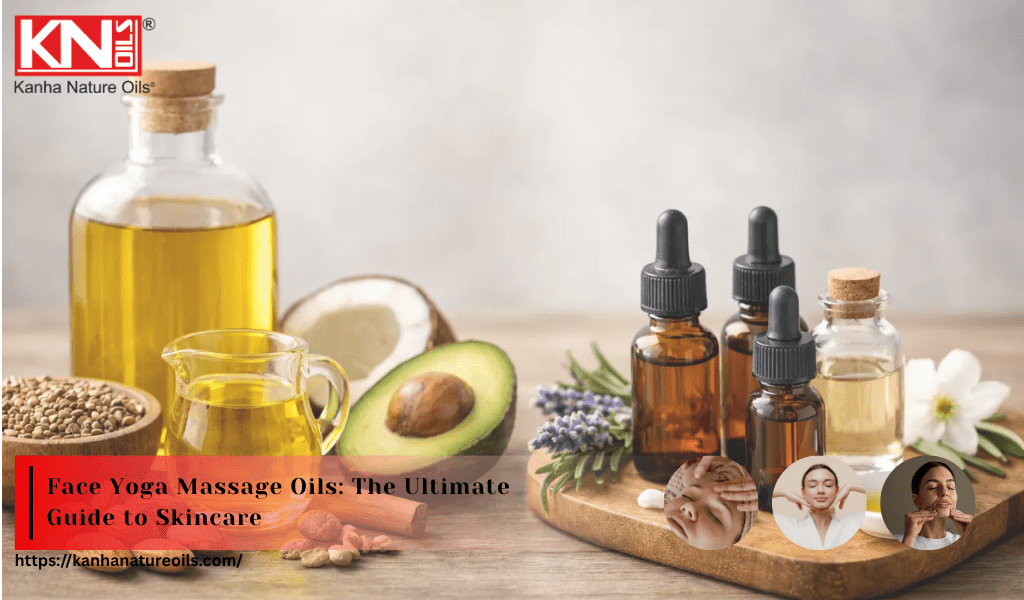
In the world of natural skincare, face yoga combined with the right massage oils has emerged as a powerful, holistic solution for achieving radiant, youthful skin. This technique blends facial exercises with nourishing oils to enhance circulation, tone facial muscles, and deeply hydrate the skin. Unlike chemical-heavy skincare routines, face yoga massage focuses on natural rejuvenation—making it a preferred choice for those seeking long-term skin health. This comprehensive guide from Kanha Nature Oils tells you everything you need to know about face yoga massage oils—including their benefits, how they work, and in-depth details on the most effective oils, such as Kumkumadi, jojoba, rosehip, almond, and grapeseed oil. Whether you are just starting out or are a skincare enthusiast, this guide will help you achieve naturally radiant and healthy skin. What is Face Yoga and Why Use Massage Oils? Face yoga is a practice that involves repetitive facial movements, stretches, and massages designed to tone muscles and improve skin elasticity. It works similarly to body workouts—stimulating muscles, boosting blood flow, and encouraging collagen production. Massage oils play a crucial role in this process. They reduce friction, allowing smooth movement across the skin and preventing tugging or irritation. Additionally, they nourish the skin with essential nutrients and enhance the effectiveness of facial exercises. Key Benefits of Face Yoga Massage Oils: Improve blood circulation and skin glow Reduce wrinkles and fine lines Support lymphatic drainage and detoxification Relieve facial tension and stress Deeply hydrate and nourish the skin Why Choosing the Right Oil Matters Not all oils are created equal. The effectiveness of face yoga depends heavily on selecting oils that suit your skin type. The ideal oil should: Be lightweight and non-comedogenic (won’t clog pores) Contain essential fatty acids and antioxidants Absorb well without leaving excessive greasiness Different oils offer unique benefits, making it important to tailor your choice based on your skincare needs. Benefits of Face Yoga Massage Oils Using face yoga massage oils comes with a long list of benefits. First, they help improve skin elasticity. As we age, our skin loses its firmness, but regular massage can help slow this process. Another big advantage is improved blood flow. When you massage your face, you stimulate circulation, which helps remove toxins and bring nutrients to the surface. You’ll also notice fewer wrinkles over time. The combination of massage and nourishing oils helps smooth out fine lines. Plus, it reduces stress, and less stress means healthier skin. Types of Oils Used in Face Yoga There are different types of oils you can use for face yoga. Carrier oils are the base oils, like jojoba or almond oil. These are safe to use directly on the skin. Essential oils are more concentrated and usually mixed with carrier oils. They add extra benefits like calming the skin or reducing acne. Herbal-infused oils are another great option. These oils are made by soaking herbs in carrier oils, adding even more nutrients to your skincare routine. Best Carrier Oils for Face Yoga Carrier oils are the backbone of face yoga massage oils. Jojoba oil is one of the best because it closely matches the skin’s natural oils. It’s lightweight and absorbs quickly. Almond oil is rich in vitamin E, which helps repair damaged skin. It’s especially good for dry skin. Coconut oil is another popular choice. It deeply moisturizes and gives the skin a healthy glow. However, it may not suit oily skin types. Essential Oils in Face Yoga Massage Essential oils add an extra boost to your face yoga routine. Lavender oil is known for its calming effects and can reduce redness. Rose oil is fantastic for anti-aging. It helps tighten the skin and improve texture. Tea tree oil is great for acne-prone skin. It has antibacterial properties that help keep breakouts under control. Step-by-Step Face Yoga Routine Start by cleansing your face thoroughly. Clean skin allows better absorption of oils. Apply a few drops of your chosen oil and warm it between your hands. Gently press it into your skin. Begin your massage with upward strokes. Focus on areas like cheeks, jawline, and forehead. Spend at least 10–15 minutes for best results. Anti-Aging Effects of Face Yoga Oils Face yoga massage oils are a natural way to fight aging. Regular use helps reduce fine lines and wrinkles. Massage boosts collagen production, which keeps the skin firm. Over time, your skin looks more lifted and youthful. It’s a slow process, but the results are long-lasting and natural. DIY Face Yoga Massage Oils Making your own face yoga oil is simple. Mix jojoba oil with a few drops of lavender essential oil for a calming blend. You can also try almond oil with rose oil for anti-aging benefits. DIY blends are cost-effective and allow you to customize according to your needs. Face Yoga Massage Oils Face yoga massage oils are not just a trend—they are a powerful skincare tool. They combine the benefits of natural ingredients with simple massage techniques. By using them regularly, you can achieve healthier, glowing skin without relying on expensive treatments. ESSENTIAL OILS IN AROMATHERAPY FAQs about Face Yoga Massage Oils Can face yoga oils replace moisturizers?They can, but it depends on your skin type. Some people use both. How often should I use face yoga oils?Daily use is ideal for best results. Are essential oils safe for direct use?No, always dilute them with carrier oils. Can face yoga reduce wrinkles?Yes, with consistent practice, it can help reduce fine lines. Which oil is best for beginners?Jojoba oil is a great starting point. Is face yoga suitable for all ages?Yes, anyone can start at any age. Conclusion Face yoga massage oils offer a natural, effective way to care for your skin. They improve circulation, reduce signs of aging, and make your skin glow from within. The best part? It’s simple, affordable, and easy to include in your daily routine. With consistency and the right techniques, you can achieve healthy, youthful skin naturally. You May Also Like: Tea Tree
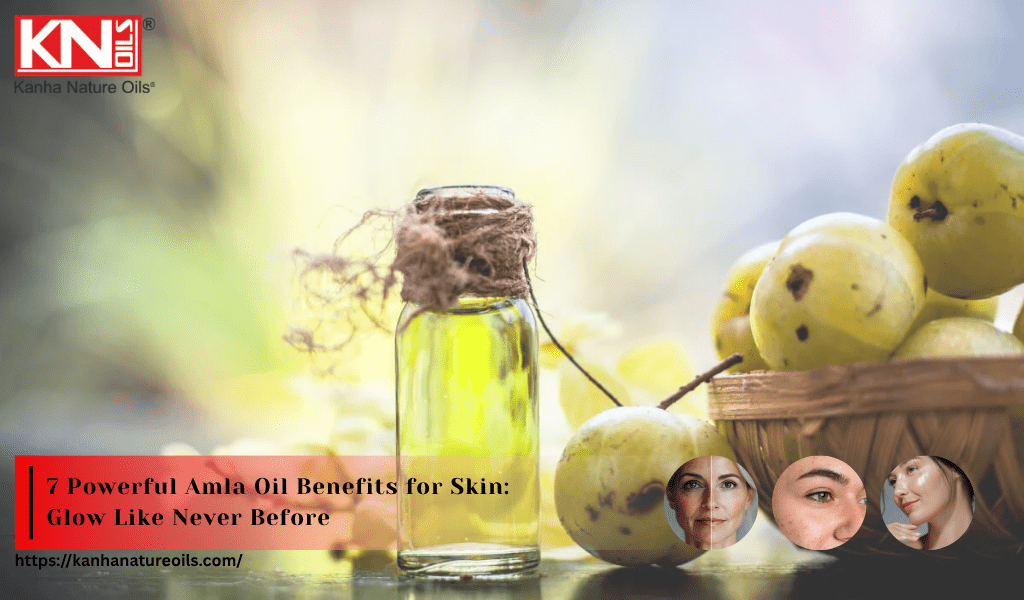
7 Powerful Amla Oil Benefits for Skin: Glow Like Never Before In the world of natural skincare, few ingredients have stood the test of time like amla oil. Extracted from the nutrient-rich Indian gooseberry (Phyllanthus emblica), amla oil has been used in Ayurveda for thousands of years to enhance beauty and promote overall skin health. Today, modern science is beginning to validate many of these traditional claims, especially when it comes to skin nourishment, anti-aging, and achieving a natural glow. Amla is packed with vitamin C, antioxidants, polyphenols, and essential minerals, making it a powerhouse for skincare. In fact, it contains significantly higher vitamin C content than many fruits, which plays a key role in collagen production and skin repair. Additionally, research shows that amla extracts can improve skin hydration and elasticity and reduce wrinkles—key factors in maintaining youthful skin. In this comprehensive guide, Kanha Nature Oils introduces you to 7 incredible benefits of Amla oil for skin—while also explaining how it works and why it deserves a place in your daily skincare routine. 1. Boosts Natural Glow and Radiance One of the most celebrated benefits of amla oil is its ability to enhance your skin’s natural glow. Thanks to its high concentration of antioxidants and vitamin C, amla oil helps neutralize free radicals that dull the skin. Free radicals are unstable molecules that damage skin cells, leading to a tired and uneven appearance. By combating oxidative stress, amla oil restores brightness and promotes a healthy, radiant complexion. Regular use can: Improve skin tone Reduce dullness Add a natural shine to the face This makes amla oil an excellent choice for those struggling with tired, lifeless skin. 2. Powerful Anti-Aging Properties Aging is inevitable—but premature aging doesn’t have to be. Amla oil is rich in compounds that help slow down visible signs of aging. Scientific studies indicate that amla contains bioactive compounds that: Reduce wrinkles Improve skin elasticity Enhance hydration levels Vitamin C plays a crucial role in collagen production, which keeps the skin firm and youthful. With consistent use, amla oil can help minimize fine lines and maintain skin elasticity. 3. Deeply Hydrates and Moisturizes Skin Dry and dehydrated skin can lead to flakiness, irritation, and premature aging. Amla oil works as a natural emollient that locks in moisture and keeps the skin soft and supple. It penetrates deep into the skin layers, providing long-lasting hydration without clogging pores. This makes it suitable for: Dry skin Combination skin Even sensitive skin (with patch testing) Additionally, amla’s nutrients help strengthen the skin barrier, preventing moisture loss. 4. Reduces Pigmentation and Dark Spots Uneven skin tone, dark spots, and pigmentation are common concerns caused by sun exposure, aging, and hormonal changes. Amla oil helps address these issues effectively. Research shows that amla has anti-melanogenesis properties, meaning it can reduce excess melanin production responsible for pigmentation. With regular application, it can: Lighten dark spots Improve skin clarity Promote an even complexion 5. Helps Fight Acne and Inflammation Amla oil has natural anti-inflammatory and antibacterial properties that make it effective for acne-prone skin. It helps: Reduce redness and swelling Prevent bacterial growth Soothe irritated skin Its antioxidant content also supports faster healing of acne scars and blemishes. Unlike harsh chemical treatments, amla oil offers a gentle yet effective solution for maintaining clear skin. 6. Protects Skin from Environmental Damage Every day, your skin is exposed to harmful environmental factors such as pollution, UV rays, and toxins. These elements accelerate aging and damage skin cells. Amla oil acts as a protective shield due to its rich antioxidant profile. It helps: Neutralize environmental damage Strengthen skin defenses Reduce oxidative stress This makes it especially beneficial for people living in urban environments. 7. Improves Skin Texture and Tightens Pores Large pores and uneven texture can affect the overall appearance of your skin. Amla oil helps refine pores and improve skin smoothness. Its astringent-like properties: Tighten pores Smooth rough skin Enhance overall texture With continued use, your skin feels softer, looks clearer, and appears more polished. How to Use Amla Oil for Skin To get the best results, incorporate amla oil into your routine in the following ways: 1. Face Massage Oil Apply a few drops to clean skin and gently massage for 5–10 minutes. 2. Overnight Treatment Leave it overnight for deep nourishment and repair. 3. DIY Face Pack Mix with honey or yogurt for a glowing face mask. 4. Spot Treatment Apply directly to dark spots or acne marks. Precautions and Tips While amla oil is generally safe, keep these points in mind: Always do a patch test before use Use diluted oil if you have sensitive skin Avoid contact with eyes Choose high-quality, pure oil for best results Although natural, some individuals may experience mild irritation, so it’s important to monitor your skin’s response. ESSENTIAL OILS IN AROMATHERAPY Conclusion Amla oil is truly a natural skincare powerhouse that offers multiple benefits—from boosting glow to fighting aging and improving overall skin health. Backed by both traditional Ayurvedic wisdom and emerging scientific research, it stands out as an effective, affordable, and versatile solution for radiant skin. Whether you’re dealing with dryness, pigmentation, acne, or early signs of aging, incorporating amla oil into your routine can transform your skin over time. You May Also Like: How to tea tree oil uses for skin Clear and Glowing Skin Top 5 benefits of nutmeg essential oil for skin, pain & well-being 7 amazing benefits of star anise oil, including benefits for skin and hair. Kanha Nature Oils For more information, contact info@aromatherapyoil.in. Mobile Number: 9810805866
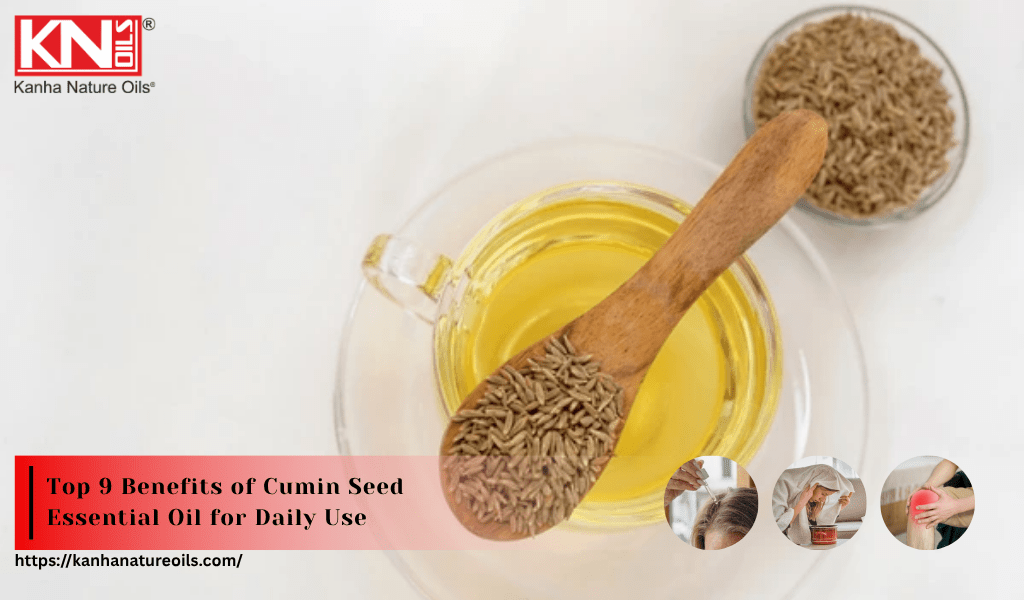
9 Proven Benefits of Cumin Seed Essential Oil for Daily Use In today’s fast-paced lifestyle, people are increasingly turning toward natural remedies to maintain their health and well-being. Among the wide range of essential oils available, cumin seed essential oil has gained recognition for its powerful therapeutic properties and versatile applications. Extracted from the seeds of the cumin plant through steam distillation, this oil is packed with antioxidants, antimicrobial compounds, and active constituents that support digestion, skin health, immunity, and overall wellness. Cumin has been used in traditional systems of medicine like Ayurveda for centuries, not only as a spice but also as a healing agent. When transformed into essential oil, its benefits become more concentrated and effective, making it suitable for daily use when applied properly and safely. In this blog, Kanha Nature Oils shares with you Top 9 Benefits of Cumin Seed Essential Oil for Daily Use. along with practical applications that you can easily incorporate into your daily routine. 1. Daily Digestive Massage Oil Digestive problems such as bloating, gas, indigestion, and stomach discomfort are common in modern lifestyles due to irregular eating habits and stress. Cumin seed essential oil is well-known for its carminative and digestive-stimulating properties, making it an excellent remedy for gut health. When used as a massage oil, cumin essential oil helps stimulate digestive enzymes, improves gut motility, and reduces gas formation. Its warming nature promotes better circulation in the abdominal area, easing cramps and discomfort. How to Use: Mix 2–3 drops of cumin seed essential oil with a carrier oil like coconut or almond oil. Gently massage the abdomen in a clockwise direction for 5–10 minutes. Use after meals or before bedtime for best results. Regular use can help maintain a healthy digestive system and prevent recurring stomach issues. 2. Morning Detox Drink (Indirect Use) Although essential oils should not be consumed directly without professional guidance, cumin seeds themselves have long been used in detox drinks. The aroma of cumin seed essential oil can complement your detox routine by stimulating digestion and metabolism. Cumin is known to support liver function and assist in flushing out toxins from the body. When paired with a healthy morning routine, it can enhance your body’s natural detoxification process. How to Use Indirectly: Prepare a warm cumin seed water drink by soaking cumin seeds overnight. While drinking, diffuse cumin seed essential oil nearby to enhance the experience. Alternatively, inhale the aroma before consuming your detox drink. This indirect method allows you to benefit from the oil’s therapeutic aroma without ingesting it. 3. Stress Relief in Aromatherapy Diffuser Mental stress, anxiety, and fatigue are common challenges today. Cumin seed essential oil has calming properties that help relax the mind and reduce stress levels. Its earthy, spicy aroma creates a grounding effect, making it ideal for aromatherapy. It works by influencing the limbic system, which controls emotions, thereby promoting a sense of calm and balance. Learn more about aromatherapy diffusers. How to Use: Add 3–5 drops of cumin seed essential oil to a diffuser. Diffuse in your living space, bedroom, or workspace. Use during meditation, yoga, or before sleep. Regular aromatherapy sessions can help improve mood, reduce anxiety, and enhance mental clarity. 4. Joint Pain Relief Massage Joint pain and inflammation can result from aging, physical activity, or conditions like arthritis. Cumin seed essential oil contains anti-inflammatory compounds that help reduce pain and stiffness. Its warming effect improves blood circulation, which aids in relieving joint discomfort and promoting mobility. How to Use: Blend cumin seed essential oil with a carrier oil such as sesame or olive oil. Massage gently onto affected joints like knees, shoulders, or elbows. Use twice daily for consistent relief. This natural remedy can be a great alternative to chemical-based pain relief products. 5. Respiratory Support Steam Inhalation Respiratory issues such as congestion, cough, and sinus blockage can make daily life uncomfortable. Cumin seed essential oil has expectorant and antimicrobial properties that support respiratory health. It helps clear mucus, open nasal passages, and improve breathing. How to Use: Add 2–3 drops of cumin seed essential oil to a bowl of hot water. Cover your head with a towel and inhale the steam deeply for 5–10 minutes. Use once or twice daily during congestion or cold. This method provides quick relief and supports overall respiratory wellness. 6. Skin Care for Acne & Glow Cumin seed essential oil is highly beneficial for skin care due to its antibacterial and antioxidant properties. It helps fight acne-causing bacteria, reduce inflammation, and promote clear, glowing skin. It also supports skin regeneration and helps reduce blemishes and scars over time. How to Use: Mix 1–2 drops of cumin seed essential oil with a carrier oil or aloe vera gel. Apply to affected areas or use as a spot treatment for acne. Use regularly as part of your skincare routine. With consistent use, your skin can become clearer, healthier, and more radiant. 7. Hair & Scalp Nourishment Healthy hair begins with a healthy scalp. Cumin seed essential oil helps improve scalp circulation, strengthens hair roots, and reduces dandruff. Its antimicrobial properties help keep the scalp clean and free from infections, while its nutrients support hair growth and thickness. How to Use: Add a few drops of cumin seed essential oil to your regular hair oil. Massage into the scalp and leave for at least 30 minutes before washing. Use 2–3 times a week for best results. This routine can lead to stronger, shinier, and healthier hair over time. 8. Natural Immunity Booster Massage A strong immune system is essential for protecting the body against infections and diseases. Cumin seed essential oil contains compounds that help boost immunity by supporting the body’s natural defense mechanisms. Regular massage with this oil can stimulate circulation and enhance the body’s ability to fight off pathogens. How to Use: Dilute cumin seed essential oil with a carrier oil. Massage onto the chest, back, and soles of the feet. Use regularly, especially during seasonal changes. This practice can